
What to Do If Pain Begins to Radiate Down Your Leg
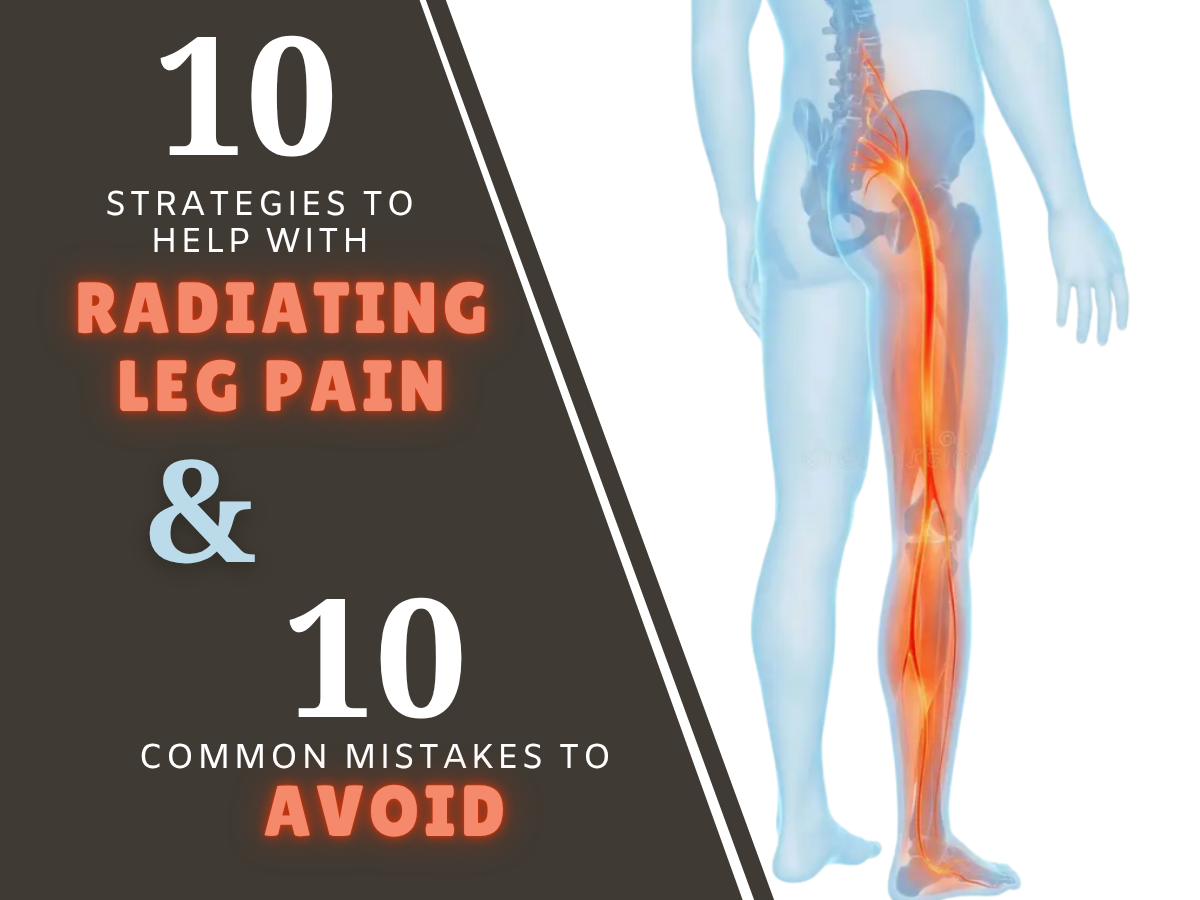
Pain that travels from your lower back into your buttock, thigh, calf, or foot is often a sign that a
nerve has become irritated. Many people immediately assume they have "sciatica," but sciatica
is a symptom—not a diagnosis. The underlying cause may involve the lumbar spine, pelvis,
discs, joints, muscles, or other structures placing stress on the sciatic nerve.
One of the biggest mistakes people make is trying to "stretch it out," push through the pain, or
simply wait for it to go away. While these approaches may temporarily change symptoms, they
often fail to address the underlying problem—and sometimes make the irritation worse.
Successful recovery generally follows three phases: calming the irritated nerve, avoiding
activities that continue to aggravate it, and addressing the underlying cause to prevent future
flare-ups.
Step 1: Calm the Irritated Nerve
When symptoms first begin, the priority is reducing stress on the irritated nerve while keeping
your body moving. The goal is not complete rest, but controlled movement that allows the
irritated tissues to settle down before symptoms become more severe.
During this phase, focus on the following:
1. Keep Moving—But Don't Push Through Increasing Pain
Complete bed rest is rarely the answer. Gentle movement improves circulation, reduces stiffness,
and decreases muscle guarding. If an activity consistently increases your symptoms, modify it
before the pain becomes severe rather than avoiding movement altogether.
2. Try a Gentle Lumbar Decompression Position
If your symptoms begin traveling farther down your leg—especially into your calf, ankle, or
foot—a simple decompression position may help reduce pressure on irritated structures in the
lower back.
• Lie on your back.
• Elevate your legs so your hips and knees are bent to approximately 90°.
• Rest your lower legs on a chair, couch, ottoman, or even an upside-down laundry basket
with a pillow for comfort.
• Relax in this position for 10–15 minutes.
• Repeat several times throughout the day as needed.
Many people notice decreased muscle guarding and less radiating pain after this position.
3. Learn Your Tolerance to Different Positions
One of the biggest mistakes people make is waiting until symptoms return before changing
positions.
Instead, learn how long you can comfortably:
• Sit
• Stand
• Walk
For example, if your symptoms consistently begin after 35 minutes of sitting, set a timer and
change positions after 25-30 minutes. The goal is to prevent nerve irritation instead of
reacting to it.
4. Take Frequent Walking Breaks
Short walks throughout the day can be one of the best treatments for radiating leg pain.
Walking helps:
• Improve circulation
• Reduce muscle guarding
• Gently mobilize the spine
• Improve hip mobility
• Promote the natural "piston effect" within the spine, which may help move inflammatory
chemicals away from irritated tissues
Focus on maintaining a normal walking pattern. If you begin limping, shorten your walk rather
than pushing through worsening symptoms.
5. Perform Gentle Nerve Glides
An irritated nerve often loses its ability to move freely through the surrounding tissues. Gentle
nerve glides (sometimes called "nerve flossing") help restore normal nerve mobility.
To perform a basic sciatic nerve glide:
• Lie on your back with both knees bent.
• Lift the affected leg while keeping the knee bent.
• Hold behind the thigh with both hands.
• Slowly straighten the knee.
• As the knee straightens, pull your toes toward your nose.
• Then point your toes away as if pressing a gas pedal while bending the knee back down.
This should be one smooth, continuous movement.
• Do not hold the stretch.
• Repeat 10 repetitions.
• Symptoms should gradually improve—not worsen.
• Perform 3-4 times per day if they are helping.
If your pain, tingling, or numbness increases or travels farther down the leg, discontinue the
exercise.
6. Sleep in Positions That Support Your Spine
Proper sleeping posture reduces stress on your lower back while you rest.
Side sleeping
• Place a pillow between your knees and ankles.
• Roll a small blanket or towel and place it beneath your waist (between your lower ribs
and pelvis) if it improves comfort and helps maintain a neutral spine.
Back sleeping
• Place a pillow beneath your knees.
7. Use Heat for Muscle Tightness
Heat can help relax muscle guarding that commonly accompanies nerve irritation.
• Apply heat for 15-20 minutes.
• Always monitor your skin to avoid burns.
• Heat is most helpful when muscles feel tight rather than inflamed.
8. Try Repeated Extension Exercises
For some people, repeated extension exercises help move ("centralize") pain from the leg back
toward the lower back, which is often a positive sign.
To perform:
• Lie on your stomach.
• Slowly press your upper body upward while allowing your hips to remain relaxed on the
table or floor.
• Lower yourself back down.
• Repeat 10 repetitions.
• Perform 3-4 times per day if your leg symptoms improve.
If your leg pain worsens or travels farther down the leg, discontinue the exercise.
9. Stretch Your Hip Rotators
Sometimes the sciatic nerve becomes irritated by tight muscles deep within the back of the hip.
To stretch:
• Lie on your back with both knees bent.
• Hold your affected knee with one hand and your ankle with the other.
• Gently pull the leg toward the opposite shoulder.
• Hold for 30 seconds.
• Focus on feeling the stretch deep in the back of your hip—not pinching in the front.
• Repeat 2 times on each side.
10. Activate Your Deep Core Muscles
Your deepest abdominal muscle—the transverse abdominis—helps stabilize your spine and
decreases overuse of the muscles in your lower back.
To learn this muscle:
• Lie on your back with your knees bent.
• Place one hand on your lower abdomen and one on your upper abdomen.
• Take a breath in.
• As you slowly exhale, gently pull your belly button toward your spine.
• You should feel only your lower abdomen tighten while your upper abdomen and back
remain relaxed.
Once you can perform this correctly:
• Hold for 10 seconds while breathing normally.
• Count out loud to avoid holding your breath.
• Repeat 10 repetitions.
Then begin practicing this contraction while sitting, standing, walking, lifting, and changing
positions.
Remember: Smaller contractions are often better. If you feel your lower back tightening, you are
likely compensating with the wrong muscles.
Think of this entire phase as creating an environment where the irritated nerve has an
opportunity to calm down.
Step 2: Avoid the Things That Keep the
Nerve Irritated
Sometimes what we do after pain begins is what keeps it going.
Avoid these common mistakes:
1. Sitting too long before changing positions. Sitting places the greatest pressure on your
lumbar discs.
2. Waiting until symptoms return before moving. Change positions before symptoms
begin.
3. Walking with a limp or heavily guarded posture. If necessary, temporarily use a cane or
single crutch on the opposite side to normalize your walking pattern.
4. Aggressively stretching a "tight hamstring." The discomfort is often coming from the
irritated sciatic nerve—not the hamstring. Stretching can place additional tension on the
nerve and worsen symptoms.
5. Staying in bed. For every day spent in bed, it often takes several days to regain lost
strength and mobility.
6. Holding your breath or straining. During activities such as bowel movements, exhale
as you push. Consider using a Squatty Potty® or footstool to improve body mechanics
and reduce strain.
7. Bending, lifting, and twisting at the same time. Use a hip hinge, keep objects close to
your body, and let your legs do the work.
8. Bending forward with straight legs. A common example is leaning over the sink while
brushing your teeth. Instead, perform a slight squat with a hip hinge and gently engage
your core.
9. Leaning backward when standing from a chair. Scoot to the edge of the chair, lean
forward, place your weight over your feet, and use your legs to stand.
10. Sitting straight up from lying on your back. Instead, roll onto your side, bring your
knees toward your chest, lower your legs off the bed, and push yourself upright with your
arms while exhaling.
The goal is not to avoid movement—it is to avoid repeatedly irritating the nerve while
continuing to move as normally as possible.
Step 3: Address the Cause So It Doesn't Keep
Coming Back
Once your symptoms begin settling down, your focus should shift toward why the irritation
developed in the first place.
Long-term recovery depends on identifying and correcting the underlying cause.
Common contributing factors include:
• Limited spinal mobility
• Hip stiffness
• Poor lumbopelvic mechanics
• Weakness of the core and hips
• Balance deficits
• Previous injuries
• Repetitive movement patterns
• Poor lifting mechanics
• Prolonged sitting throughout the workday
Long-term improvement comes from restoring efficient movement—not simply waiting for the
pain to disappear.
Helpful long-term strategies include:
1. Building strength throughout your core and hips.
2. Improving mobility where your body is stiff.
3. Practicing proper lifting mechanics.
4. Staying physically active.
5. Walking regularly.
6. Maintaining good posture throughout the day.
7. Continuing your exercise program even after symptoms have resolved.
The goal isn't simply to eliminate today's pain. The goal is to build a body that is less likely to
become irritated again.
When Should You Seek Medical Care?
Radiating leg pain should be evaluated promptly if you experience:
1. Progressive weakness in your leg or foot.
2. Difficulty lifting your foot while walking.
3. Loss of bowel or bladder control.
4. Numbness in the groin or saddle region.
5. Severe pain following a significant fall or other trauma.
6. Symptoms that continue worsening despite several days of activity modification.
Remember
Pain is your body's warning system—not the problem itself.
The sooner you learn what calms the irritated nerve, recognize the habits that keep it irritated,
and address the underlying movement dysfunction contributing to the problem, the better your
chances of making a full recovery and preventing future flare-ups.
If your pain continues to radiate down your leg or keeps returning, it may be time to determine
why it's happening. At Core Essentials Physical Therapy & Wellness, our Doctors of Physical
Therapy perform comprehensive biomechanical evaluations to assess how your spine, pelvis,
hips, strength, mobility, posture, and movement patterns are contributing to your symptoms. We
then develop an individualized treatment plan designed to restore efficient movement, address
the underlying cause, and help you return to the activities you enjoy with confidence.
Similar Posts
%201.jpg)


Insurance Providers
.webp)
.webp)
Cash Based with receipt provided for patient to self submit for out of network benefits for all other insurances
